Let's Talk Disability - An accessible estate for all.
Download MP3Featuring Beth Micakovic & Jon Ashley | Hosted by Professor Jackie Carter
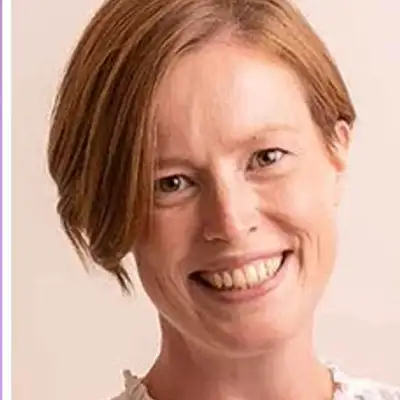
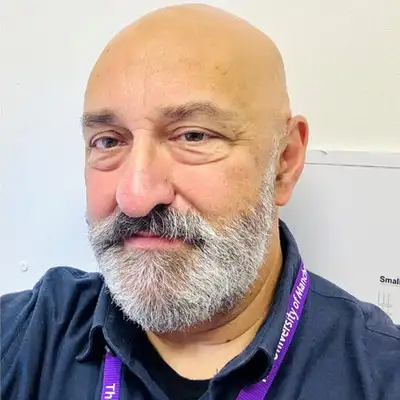
In this deeply moving and thought‑provoking episode of Let’s Talk Disability, Professor Jackie Carter sits down with two colleagues whose work sits at the intersection of lived experience and institutional change: Beth Micakovic, Director of Faculty Operations in the Faculty of Biology, Medicine & Health, and Jon Ashley, Assistant Director of Estates and Head of Estate Support.
Beth begins with a powerful account of her experience of being diagnosed with breast cancer at age 31, just days before her daughter’s first birthday. She reflects on treatment, recovery, post‑cancer fatigue, brain fog, and the lifelong presence of anxiety — and how these shape her professional life, leadership style, and resilience. Her story brings visibility to the often overlooked worlds of invisible disability, post‑treatment realities, and the emotional turmoil of navigating life‑altering illness while working in a demanding role.
Jon brings a complementary perspective from the physical environment of the University. He reflects on how estates design impacts everyone — particularly disabled staff and students — and how hidden barriers can prevent people from experiencing the campus equitably. From inaccessible entrances to overstimulating digital environments, Jon shares how the Estates team is working to learn, listen, and co‑design spaces with disabled colleagues at the table from the very start. His emphasis on empathy, experimentation, and long‑term planning highlights the importance of designing inclusive spaces, not just compliant ones.
Together, Beth and Jon explore powerful themes, including:
- the realities and emotional labour of invisible disabilities
- post‑cancer recovery, the ambiguity of “being well again,” and the impact of brain fog and fatigue
- why hybrid estates — digital and physical — must be understood together
- the importance of embedding disabled voices into estate strategy at project inception
- the role of networks and psychologically safe spaces in empowering disabled colleagues
- how simple things like card‑reader height, separate entrances, or overstimulating environments can quietly exclude
- the need for agile, iterative, human‑centred design across campus
- why staff disclosure matters — and how data informs better support and infrastructure
The conversation is rich with insight, humanity and practical wisdom as Beth and Jon discuss the interplay between wellbeing, workplace culture, and inclusive design. They highlight how a university campus can either uplift or unintentionally undermine those living with chronic illness, anxiety or fluctuating energy.
As always, the episode concludes with meaningful commitments:
Beth asks Jon to continue deepening training and bringing more colleagues into this work; Jon pledges to champion context‑based training and to help others “open their eyes” to accessibility, agency and invisible disability.
Beth asks Jon to continue deepening training and bringing more colleagues into this work; Jon pledges to champion context‑based training and to help others “open their eyes” to accessibility, agency and invisible disability.
This episode is both heartfelt and deeply practical — a must‑listen for anyone interested in disability inclusion, estates strategy, invisible illness, or building compassionate, equitable environments where every colleague can thrive.
There is a reference in this episode to a blog by Carsten Timmerman. You can find this at Measuring Quality of Life in Cancer Treatment: A Historical Focus – Cancer Prevention and Screening Blog (qmul.ac.uk)
Send us your questions or comments to equalityanddiversity@manchester.ac.uk with the subject 'LTD' or connect with Jackie on Linkedin at https://www.linkedin.com/in/drjackiecarter
Don’t forget to like, comment, and subscribe for more conversations that move from dialogue to action!
Creators and Guests

Host
Professor Jackie Carter
Academic EDI Lead for Disability, member of the Shaw Trust Power 100 for 2023. Author of Work Placements, Internships & Applied Social Research. Prof of Statistical Literacy. FaCSS, NTF. 1-in-20 Women in Data. Late Bloomer. @GM4Women