Disability Inclusion in Higher Education: Stories, Advocacy & the RIDE Higher Initiative
Download MP3Join Professor Jackie Carter, academic lead for Disability Inclusion at the University of Manchester, as she hosts the latest episode of the "Let's Talk Disability" podcast. This special instalment features external guests Dr Mel Best and Julian Gwinnett from the University of Wolverhampton, alongside Dr Hamied Haroon, Chair of the National Association of Disabled Staff Networks.
Together, they share personal experiences of living with disabilities, discuss the challenges and opportunities within higher education, and introduce the Ride Higher initiative—a collaborative project aimed at advancing disability inclusion for staff across UK universities.
Key topics include:
- The importance of visible and hidden disabilities.
- The role of advocacy networks and community support.
- The impact of the Ride Higher initiative and NADSN.
- Practical steps for institutions and individuals to foster inclusion.
- Calls to action for allies, leaders, and disabled staff.
Whether you’re a university leader, staff member, student, or ally, this episode offers valuable insights and inspiration for creating a more inclusive academic environment.
Send us your questions or comments to equalityanddiversity@manchester.ac.uk with the subject 'LTD' or connect with Jackie on Linkedin at https://www.linkedin.com/in/drjackiecarter
Send us your questions or comments to equalityanddiversity@manchester.ac.uk with the subject 'LTD' or connect with Jackie on Linkedin at https://www.linkedin.com/in/drjackiecarter
Listen, learn, and help drive real change—because disability inclusion benefits everyone.
Creators and Guests
Host
Professor Jackie Carter
Academic EDI Lead for Disability, member of the Shaw Trust Power 100 for 2023. Author of Work Placements, Internships & Applied Social Research. Prof of Statistical Literacy. FaCSS, NTF. 1-in-20 Women in Data. Late Bloomer. @GM4Women
Guest
Dr Hamied Haroon
Co-Chair of the National Association of Staff Networks and Research Associate at The University of Manchester
Guest
Dr Mel Best
Mel is a Senior Lecturer in the Institute of Human Sciences, teaching on the BA (Hons) Sport Studies and Development course and the new BA (Hons) Sport Business Management course. Her teaching focuses on sport development and research modules, and she believes that learning should take place outside of, as well as within the classroom. As such she enjoys challenging students to complete tasks within the wider sporting community. Mel completed her PhD at Loughborough University, exploring the psycho-social health and well-being of Britain's Wheelchair Basketball athletes in relation to the London 2012 Paralympics. Her further research was focused on Paralympic athletes, and includes a current piece of research examining inspirational leadership within British Judo and British Wheelchair Basketball ahead of the Tokyo 2021 Games.
Guest
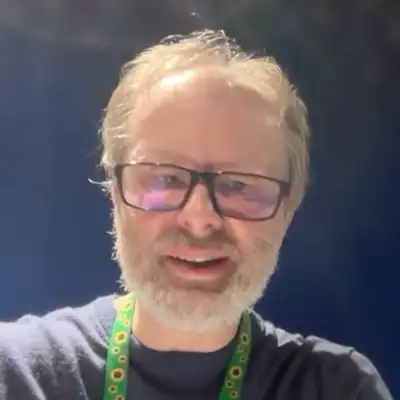
Julian Gwinnett
I have experience of a physical disability, sensory impairment, and a long-term medical condition – all of which contribute towards my health and wellbeing. Yet the ‘disability’ which causes me the most consternation, the thing above all others by which I am ‘othered’, is something I don’t consider to be a disability – far from it! Neurodivergence has been described as ‘a beautiful curse’ something that resonates strongly with my own experience. As it’s a hard to comprehend why what, in your mind, makes you unique is the same thing that impedes your relationships with others. Leading to an increased sense of isolation and marginalisation form the rest of the world. I never imagined that something I had no control over (how my brain is wired), would be such a dominant feature of how I’m perceived and valued by society at large. Or equally how challenging misassumptions about neurodivergence would define my own life to the extent that it has. This, in turn, has imbued a passion for fairness and justice borne of witnessing the manifold injustices metered out to others whose voice has so often been denied them. Consequently, I would like to contribute, in whatever way possible, towards creating an environment for university staff whereby they feel confident to disclose their disability without fear of suiciding their careers. Moreover, I feel that we need to foster a culture of inclusivity – more so than ever – within our own institution. One where we can see beyond a person’s ‘disability’ and see both their potential (that is often overlooked) and the value of their experience, as a disabled person, in challenging the many misconceptions and prejudices that foreshadow disability awareness. As well as creating a workplace environment in which everybody feels valued.