Disability Inclusion in Higher Education: Stories, Advocacy & the RIDE Higher Initiative
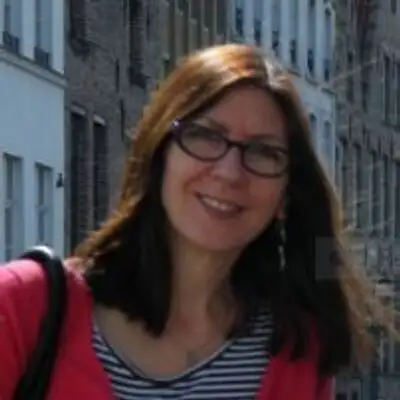
Download MP3JACKIE: Hello, I'm Jackie Carter. I'm a professor in Statistical Literacy and the Academic Lead for Disability Inclusion at the University of Manchester. I live with a disability and a long-term condition and often describe myself as deaf, dizzy and disabled. Here's a fact of two. 24% of the working age population in the UK has a disability. 80% of disabilities are hidden or invisible, as are mine. I started the Let's Talk Disability podcast series to provide a platform to raise awareness of what it means to be a disability -inclusive university. The podcast is a series of conversations which I host on the lived and living experience of our colleagues and postgraduate students of being disabled or having a long--term condition. On each episode, I host two guests. One is a senior leader at the university, a person with influence and responsibility. The other is a member of staff or postgraduate student who is open to sharing their disability or long-term condition. The aim is to demystify what being disabled means and create a culture of sharing. But, and this is important, each episode moves from dialogue to deeds, from talking to action. The senior leader is invited to commit to just one thing, an action they will take away as a result of the conversation. The disabled guest gets to say what one thing would make the difference to their lived experience as a colleague or a student at the university. So let's dive in and find out what today's guests want to share and what they will commit to to make our university more disability-inclusive. Hello everybody and welcome to this episode of Let's Talk Disability. We are really delighted actually with this episode because it's the first one we've done in the series where we've had external guests come in and we'll explain who's here in a minute. But if I can start by saying hello, I'm Jackie Carter, I'm the EDI Disability Inclusion Lead for the University of Manchester. And today with me physically in the recording studio in Manchester, I have Hamied Haroon. So Hamied, could you start please by introducing yourself again?
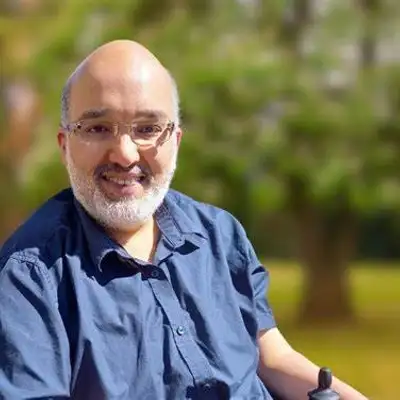
HAMIED: Hello Jackie and hello everyone. This is great to have this podcast with some guests as well from not too far away. So my name is Hamied Haroon. I'm a research fellow in the Faculty of Biology, Medicine and Health at the University of Manchester, but I am also Chair of the National Association of Disabled Staff Networks, of which we have many projects. And Mel, who is one of our guests, is going to tell us more about that but we shall hand over to Mel and Julian to introduce themselves.
JACKIE: Fantastic, thank you. So Mel, Julian, over to you in your studio in Wolverhampton.
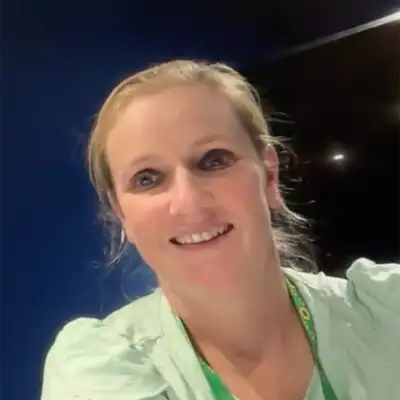
MEL: Yeah, great to be here, great to join you virtually. I'm very excited to do this. So I'm Dr Mel Best. I'm based at the University of Wolverhampton and I've been an academic for the last 10 years, working in the School of Sport as a senior lecturer, but I've recently made the shift over to working within our central EDI team as a senior advisor specialising in the inclusion of disabled staff. And I'm also the lead of RIDE Higher, which is one of the projects of NADSN. And I'll hand over to my colleague Julian.
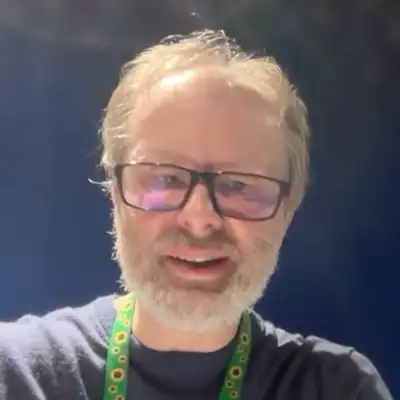
JULIAN: Hi, yes, thank you very much Mel. My name's Julian Gwinnett. I also work at the University of Wolverhampton as a disability inclusion advisor, so that's mostly helping students to get the help and support they need, the recent adjustments they require to overcome, the many barriers and challenges you face throughout life as a disabled person. I've also recently made the shift, having been here at the University pretty much since the end of the dinosaurs and when mammals first started walking the earth, so basically a very long time. I was formerly a technician in the School of Art, but have now moved over into a more support role for disabled students throughout the university.
JACKIE: Thank you both. Sorry, Julian, I thought you'd finish, carry on.
JULIAN: No, I can't, because this is a disability focused podcast, I can't not resist the temptation to say how this is actually the very first time that I've ever sort of like introduced myself on a podcast, despite actually hosting a podcast channel, because autistic people like myself find it really quite difficult and challenging sometimes to actually talk about ourselves. It's one of the hardest subjects in the world to talk about.
JACKIE: Thank you so much, Julian. I think, you know, you've just queued something in that I wasn't going to do, but let's do it anyway. So three of us today are wearing our Sunflower Lanyards and maybe what we do is quickly go around and just say a little bit about our own disability in as far as you want to describe it. So the listeners to this podcast know and the people at the university know that I describe myself as deaf, dizzy, and disabled, and I do that now because I want to identify with those. I'm not one for labels at all, but I do want to what my condition is so that other people can have some understanding of my needs. And so that's why I wear the Sunflower Lanyard proudly. We've done lots of campaigning around the Sunflower Lanyard at the University of Manchester, because here's that stat that I wheel out all the time. 24% of the working-age population have a disability or chronic condition, and 80% of those disabilities, it's estimated, are hidden. So I wear my lanyard to really sort of showcase that I have a hidden disability. So that's me. Let's go, in fact, Julian, let's do it in reverse order this time. How would you like to self-describe, self -identify?
JULIAN: I'm happy to describe myself as a disabled person. I'm also happy to describe myself as a disabled person with multiple disabilities, so give me some time to list them. So I have a shoulder defect, which I was born with, which doesn't allow me to lift my shoulder above a certain height, and as I've progressed throughout life has begun to cause various complications for my back, and in particular, I also actually can only hear in one ear as a result of suffering a fractured skull many, many, many years ago, which left me totally deaf in one ear. And I've recently had heart surgery to overcome, sort of like a leaking heart valve from a congenital heart defect. And all those are actual disabilities that have throughout my life actually caused various challenges for me, but I'm also an autistic person, and the difficulty I have there is actually associating being autistic as actually being a disability. Sorry for the confusion there for anyone who's listening, because to my mind I can't be anything other than an autistic person, so it's difficult for me to imagine being different or seeing, experiencing and understanding the world anything differently to the way I do. And it's also therefore incredibly difficult to actually imagine that there's something wrong with seeing, understanding and experiencing the world the way that I do. But I am obviously conscious of the fact that this is my experience and that may not be the truth for every autistic person. I've spoken enough there, so I'm going to hand over to you guys.
JACKIE: Thank you very much. Mel, do you want to go next? That was very erudite, very eloquent. Thank you very much, Julian. Mel, what about you? What do you want to share?
MEL: Yeah, so I have OCD, Obsessive Compulsive Disorder, and I was diagnosed when I was in my early 20s, and it was extremely debilitating at first, and very difficult to manoeuvre. But with quite a lot of therapy and medication, it's fairly well controlled these days, but I'm always going to be predisposed in certain ways. And actually, there are benefits to having OCD in that I am very meticulous and organised, but there's also certain situations that I would find more challenging. And also, if I experience periods of stress, then my OCD is more likely to wear its ugly head and I have to manage it to make sure that it doesn't. And that's me.
JACKIE: Thank you, Mel. And back in the room to you, Hamied, what would you like to share?
HAMIED: So I like what Julian said before about not being able to identify or know any other experience than being autistic for what Julian was saying about himself. So very similarly, I've always been a disabled person myself. I was born as a disabled child. I've got a genetic condition that's called Charcot-Marie-Tooth disease, although there's nothing wrong with my teeth, which are pristine. So those were the three neurologists who described this condition, which is a peripheral neuropathy. And so when I was little, I was able to do much more than I can now. It's been a degenerative condition. But when I was little, the only school I could go to was a special school, just full of disabled children. But we had a great time. We did all sorts of amazing stuff at school. But academically, there wasn't that stimulation there. So really, I think the path that's got me to here is that chance in life to be integrated into mainstream high school and have the opportunities other kids had, although there was so many barriers and so much inaccessibility and all that experience. But yeah, also, my heritage being of Pakistani background, it was really hard for my mum. So Mel knows this because we talked about this in a previous meeting, but it was hard for my mum because the stigma around disability, the kind of ignorance and just all the negative attitudes around disability. And my mum having a disabled child and being called out even by her own mother that she had a disabled child because of her sin and her guilt, and this was her punishment. But she wasn't having any of that crap. She kind of took the bull by its horns. In fact, before having me, she was training to become a teacher and trained in special educational needs, in fact, for disabled children. That was before having me. So it's like a bit of a destiny thing. But then she had me and then she brought together a community of South Asian mothers who had disabled children and brought them together in a scheme that was called Himmat. And in Urdu, Himmat means courage, bravery, strength. Yeah, to really face those adversities that we're struggling against.
JACKIE: Wow. So I'm nodding and we're nodding at the end of the camera here. So those of us who know Hamied and he's about to talk about the National Association for Disabled Staff Networks can see maybe where you get some of your vision and grit and tenacity from. So that's brilliant. Thank you everybody for sharing. Okay, so what we want to do on this episode is really to sort of give you some, the listeners, some understanding of what's happening across the sector, the higher education sector in particular, with regards to disability inclusion. So everybody's got their own sort of expertise and lived and living experience in this space. But I think maybe the best way to do this, Hamied, if we can go back to you and if you can paint a picture of what's happening nationally through NASDN and then, Mel, if we come to you and we talk a little bit about the project that you introduced at the start, so the RIDE Higher initiative, who's involved with that, what the purpose is and what we're trying to do. And then Julian, maybe if we sort of come to you and think about what's happening locally at your institution and I can sort of chip in and weave some things together as they occur to me, is that okay?
JULIAN: Wonderful.
JACKIE: Right, so let's tell the story of what's happening in disability inclusion and why we need it. So there we go, Hamied, over to you. That's your cue. What do you want to say with regards to NASDN?
HAMIED: Thank you, Jackie. So the National Association of Disabled Staff Networks, in fact, was born here at the University of Manchester just over 11 years ago. So our Disabled Staff Network was doing great things, bringing in support for disabled staff alongside what was already here for disabled students and other such initiatives at this university. So we decided, because other people were interested in what we were doing from other universities, NHS trusts and others, so we held a national conference and invited disabled staff from universities, colleges, NHS trusts, the BBC, all sorts of organisations from across the country to come to Manchester and we called it What Are We Hiding, which is very relevant to the Sunflower Lanyard, and that had a double-edged sword. It was about hidden disabilities, but also the hidden contribution that disabled people make to the economy and society at large and the roles that we play, which are often hidden away, nobody ever sees what we do, and usually disability is just a very negative thing, but we bring that positivity. At that conference is where we launched the National Association of Disabled Staff Networks, or NADSN for short, and we are a community, a thriving and growing community of disabled staff, mainly at universities, some colleges, some NHS trusts are joining us, BBC, ITV, other organisations in the public sector also joined us and we're open to anyone who's interested in advancing that equity, inclusion, diversity and equality and access for disabled staff. And yeah, we're kind of working together to look at those challenges that we face together in the higher education sector, so the whole point is to connect and represent these disabled staff networks at all of these various institutions where really we're struggling against very similar barriers, very similar negative kind of connotations around disability and yeah, that kind of thing. So we thought why not all get together across the country and help each other out, share those experiences and face those challenges together, and also to raise the positivity of us as disabled staff and exactly what we bring in terms of the joy and the difference that we make as well to the sector across here. And we've done lots of work, we've worked with all sorts of different projects and partners and yeah, that is growing all the time. And just yesterday, our STEM Action Group, which is one of, I think it's six groups now we have within NADSN.
JACKIE: STEM stands for?
HAMIED: Oh, thank you Jackie for reminding me. STEM is Science, Technology, Engineering, Mathematics and Medicine.
JACKIE: Thank you.
HAMIED: And so we, our group published a white paper on how to transform STEM to be more inclusive of disabled people and so we launched that at the University of Strathclyde earlier this year and the Welcome Trust very graciously hosted an event with us and for us at their offices in London yesterday and we invited learning societies and membership organisations and professional bodies to come and to listen to what that white paper is all about and especially the recommendations we're making in that. And Dr Jess Boland from our university was on a panel that was hosted by Professor Jennifer Lee and Dr Jesselyne Jolly kind of pulled it all together and made the event such a successful kind of time and bringing people together. There's so much energy, such a buzz in the room, but those vignettes that we read out that colleagues were reading out, NADSAN colleagues in fact were reading out from the white paper were very hard-hitting, they were very emotive, they really got to the core of what our experiences are, many of us as disabled people in the sector. But one of the vignettes was actually a very positive story that if that support is in place that we need, if there is inclusion there, if your line manager wants to understand how to support you as a disabled person, what difference that can make and how all of a sudden your job can be so much better and you can contribute so much more.
JACKIE: Thanks Hamied, that is so important. Dr Jessy Boland has been a guest on one of these episodes previously in which she talked about the need to have that support and also to identify where in the system, the system being higher education, things are not going as well as they could be, but how to address those, for instance she was talking about being able to have support in filling in application forms for funding and sometimes the mere nature of the funding form is too short so you can't address the nature of your needs according to your disability. So it sounds to me from what you said, and I know but please tell the listeners and then this will segue nicely Mel into what you're going to be talking about with RIDE Higher, is that NADSN is like a super network, it's a network of individual disabled staff networks at institutions, mostly publicly funded. I suppose this is a bit of a putting you on the spot question, but what sort of impact do you think that coming together, that working in partnership, that awareness raising and moving to action has?
HAMIED: So I think that coming together, the power of that is that you don't feel isolated, it's not like these are just problems that you're facing as an individual, but then when you come together as a network in your organisation, that these problems are not just to do with your organisation, these are experiences, these are barriers that people are experiencing all across the sector in so many institutions, some being worse and some being better than others. So really bringing those experiences together, the good and the bad, and knowing I think that that whole kind of feeling that you're not alone, you're not the only one who's experiencing that, others are too, and that you come together to look at okay what are these challenges we're facing together, what is it that needs to change, what is it that we need to do, much of that can be radical things that will take a long time to set in, but there are so many things that can be done in the very short term that can make an instant change, just attitudes, changing attitudes, changing stereotypes, just that and the whole kind of discourse around disability, changing that, flipping it from the negative, the deficit, kind of medical model that we're the problem in society, flipping it the other way and saying actually the problems are the structures, the system, the way things are done that make us disabled. So I think changing those conversations are a very easy win to supporting people much.
JACKIE: Thank you Hamied and challenging those and Julian you touched a lot earlier, you know, living in a world that hasn't been designed for you because it's neurotypical or other, then makes everybody's much harder than it needs to be, so designing inclusivity and at the start. Mel, how about building on what Hamied has said and thinking about what is RIDE Higher and what is RIDE Higher trying to do and what's your role in it in helping to achieve that?
MEL: Okay so well RIDE Higher stands for Realising the Inclusion of Disabled Employees in Higher Education and it was set up really as a subgroup or an initiative of NADSN, really in response to the absence of a bespoke charter mark to support disabled staff at the universities. So Advanced HE obviously have Athena Swan for gender equality and the REC, the race equality charter, but there's no equivalent for disability and I think there were concerns within the sector and certainly within pockets of NADSN that, you know, that could mean that disability was overlooked, that disabled staff didn't really have a voice, that there wasn't anything to really leverage universities to take disability inclusion of staff more seriously and from there RIDE Higher was born, so it's run by a collection of individuals who give up their time voluntarily, all disabled or working within the higher education space in a range of different roles, really importantly not just academic roles, professional services staff as well, and in effect a group of like-minded individuals, you guys obviously are involved, well all three of you are involved in the steering committee which is wonderful, and what we're trying to do is provide a mechanism for sharing good practices from across the sector using a website, so we are building a website which will in effect be a repository of information, of resources, of podcasts, of articles, of signposting on so that if you're a disabled member of staff or you are a line manager or an EDI lead you can access that website and you can find resources to help you and that might be that you're at a university where you want to introduce a reasonable adjustments passport and you want to access examples of those from other institutions so you can hit the ground running or it might be you want to introduce disability leave and you can access not only that information from other universities but contacts so you can reach out to those individuals and ask questions so that you can stop reinventing the wheel and stop working in silos all the time but actually learn from each other's practices and be empowered by some really excellent work that's happening in this space and I think it's critical to say that we've deliberately taken a non -punitive approach and it's not about filling in lots of forms, it's not a tick box exercise, it's about trying to do something that's meaningful and valuable for those people on the ground so it's very much by and for disabled people so it doesn't matter at your institution if you are right at the beginning of that journey and your first focus is on setting up a disabled staff network or if you're much further along in that journey there's a starting point for everybody and it's about trying to find a way to move their journey forward and to support one another and to collaborate in that process and so I lead on that work and Hamied has been forced by me to deputise, to be my deputy and then Jackie and Julian and you've been coerced into that group alongside others
JACKIE: Willingly
MEL: Yes well I'm not sure I'm pretty sure I coerced Hamied but we in effect are trying to represent NADSN and those members and whilst NADSN provides this fantastic space to support one another as colleagues we're trying to kind of look at how as institutions we can work and learn from each other more effectively in order to leverage the sector to improve their disability inclusion and I think it's worth saying that we don't just do that in isolation we work alongside the Disabled Student Commitment, the University Mental Health Charter, Advance HE's institutional inclusion framework that's being launched in January so we are wanting to collaborate with others in this space and really seize this opportunity at the moment to try and improve that lived experience of disabled staff so our kind of tagline if you like is to see disabled staff, we want disabled staff to feel valued, to be seen and to thrive and so that's really what RIDE Higher is about.
JACKIE: Can I come back on some of the things you've said because you've covered an awful lot there okay and it's rich but it's also at the start of its journey and it sounds like it could have tremendous impact so just to repeat that it's for higher education and it's for staff because there's a gap in terms of provision for higher education staff across the sector can you tell us a little bit about you know what that need is so Hamied has talked about the need generally for disability inclusion what do you know about the need within the sector higher education staff in the sector that means that RIDE Higher will support filling that gap and support the people who are in that space?
MEL: Yeah sure so we actually launched the national disabled staff survey back in December 2024 and we wanted to really temperature check the sector and find out what the what the situation is so we know already that the 24% that you mentioned earlier Jackie of individuals in society that have a disability well that's not reflected in the staff and staff population so whereas for example our institution maybe 18% of students share a disability for staff it's about 8 or 9 % and that doesn't reflect in reality that reflects a number of individuals that don't feel safe to share and reflects the fact that to some degree higher education isn't seen as an accessible space for disabled individuals seen as quite ableist quite elitist so the national disabled staff survey reached around 124 institutions and over 800 disabled staff and the results were not unexpected but somewhat sobering and pointed to the sense that staff feel that the focus in universities is very much on disabled students rather than disabled staff on the fact that they lack a sense of belonging and they don't feel valued 44 percent have thought about leaving the university because of a lack of disability inclusion there were concerns about whether their institution would really advocate for them and a feeling that staff have to self-advocate and lack the skills sometimes to be able to do that and that actually there is some limited support and a need for further support in order for staff to really fulfil their potential and so that paints a bit of a picture really of the current state of play within higher education and anecdotally we know that staff are struggling through the NADSN membership and and what is shared you know we hear as Hamied mentioned you know that feeling of not being alone because people are struggling they are struggling in this space and that's such an important network to help people to feel that sense of belonging and I think RIDE Higher is really about saying it's a bit of a call to action to universities to say this isn't really good enough you know with health and safety legislation it's followed whereas the equality act is almost seen as nice to have sometimes in universities that we're not necessarily seeing universities invest as much in their the inclusion of their disabled staff and so RIDE Higher was really in operation to try and address that and work alongside partners to try and improve that climate
JACKIE: Brilliant so how do you think universities so you know given the 180 or something universities across the UK how much uptake do you think there will be in terms of sharing because my own history I've been involved in sharing open educational resources previously you know and different institutions have different approaches to sharing outside of their walled gardens so what do you think the likelihood is and the appetite for sharing good practice materials or templates or you know this is how we do it at the university effects what do you think that's going to go down like
MEL: I think what's interesting about the approach of RIDE Higher is that we're not necessarily always relying on the senior leaders to be the one to take the first step RIDE Higher is for everybody it's about saying this is a space where if you're interested in disability inclusion in higher education come to the website and get the resources that you need so the leveraging could be from the disabled staff themselves or an EDI lead or a disabled staff network chair as well as senior leaders now we know of course that senior leaders are the one that are going to make the decisions within universities but I think there is the leveraging that will happen with those other individuals within RIDE Higher so we see through the NADSN mailing list people reaching out for information reaching out for support examples of practices and policies and I think there will naturally be a progression to people looking to the RIDE Higher website as the first port of call to establish those resources and our networks and our partners I feel very strongly that over time it will start to become that go to space and place where people instantly think 'oh well actually I don't know that' and line managers as well how many line managers who may have a disabled member of staff but don't know enough about it and then go to that website to access fact sheets or resources as a conversation starter to have with that member of staff so I think the uniqueness of RIDE Higher and the potential impact it can have is really born from the fact that it enables lots of people from different vantage points to tap into those resources and then to leverage from those positions and to affect change within their spaces
JACKIE: Yeah and before I move on to Julian I'm just going to come back for me just to sort of round off by working in partnerships you made it very clear that you know it's a collaboration across universities but it's also a collaboration with university wide organisations like Advance HE so you know how do you anticipate that working because that's sort of support for if you know not endorsement by but support for something that they don't have necessarily the expertise in and also the resource to really address at scale how are the two going to work hand in hand to the benefit of staff in higher education
MEL: I think that we'd be, we've RIDE Higher has come at a really critical point in the it's the time when Advance HE are looking to introduce this inclusive institution framework in January 2026 and they'll be asking universities within that framework to identify their inclusion priorities and there's a natural go-to for gender or for race because you look to the REC or you look to gender equality but if as we're anticipating universities look at their disability inclusion where do they look to? Well RIDE Higher is a potential place to look to so we are working quite closely in order to share what we're doing in this space and also so we're currently co-creating an article with One HE about off the back of our survey results and some of their data kind of what's the current climate and what do we need to do next and kind of what's the call to action for universities and we hope that RIDE Higher will complement the direction of travel they're taking and I think there is an acknowledgement at the moment that if you go to conferences like the Advance HE Conference that you attended Jackie that you don't necessarily always see disability as high on the agenda and it sometimes does seem to be forgotten in and amongst the other protected characteristics and I think the relationship we now have with Advance HE will help to minimise that risk of disability being overlooked and that collaborative approach will help to ensure that disability remains high on the rate high on their radar because I think they're really keen themselves to try and make sure that universities take that disability inclusion more seriously and invest in it more but we will you know and it's really important to make this point we will remain independent we will work and complement them but that doesn't mean we become yes people or anything like that you know this is disabled people who have had these challenges themselves looking to make sure that other disabled staff don't have those challenges and so that sometimes means difficult conversations and it means challenging Advance HE and equally they might sometimes challenge us and that's a really healthy relationship and position to be in so we really advocate for those staff and the staff can trust that we are working in their best interests
JACKIE: Great I think that advocacy is really important and the last thing I'll say on that and then I'll hand back to you Hamied because you had some comments is you used the term activism earlier okay and I think one of the things that sometimes I find gets forgotten in disability inclusion spaces and equity spaces is you know there's a long history of disability rights and disability activism and I think you've talked about advocating and those of us who are very vocal like the four of us are on the table and often that's not just not always words it can be deeds as well in respecting and advocating for disabled people be doing that together having the strength in numbers to do that through organisations like RIDE Higher or through NADSN gives you it gives you your family it gives your tribe the people who've got your backs who understand it so there's nothing quite as refreshing as having had a bad week at work going into the NADSN monthly catch-up or whenever they are and then being able to offload some of your problems and issues but then getting the support back because the people in that group really not only get it and understand it from a lived experience perspective but they've often got what you've been talking about Mel they've often got solutions or ways that they've tried earlier or examples of where you should go and look for information it's just such a rich crowd sourced fund way of finding support for what you've got so to start bring it back to I don't know what you wanted to say Hamied but that for me one of the things I've has enabled me to do my job has been because other people have my back and that gives me opportunity to speak honestly, openly authentically challenge all the way up to the Vice Chancellor Duncan Ivison will listen to this he'll know that I he describes me as a positive disruptor because I think we need to be in order to be able to address the systemic inequalities in the organisations we're in to be able to push back and change
HAMIED: So that that's exactly Jackie well what we want from what NADSN wants from RIDE Higher so what we want is real change for disabled staff and for this to be led by disabled people ourselves not for anyone to be dictating what this scheme should be or the framework how the framework should work what we're really conscious of are the weaknesses if you like in the charter marks around gender so Athena Swan and the Race Equality Chartermark that sometimes very often universities are using them as tick box exercises we do not want that for RIDE Higher we want real systemic change change that's going to make a difference to the disabled staff on the ground and isn't just a reputational thing but something that will really move us forwards in getting to true disability inclusion which I think is so very key and so very exciting for us for NADSN to have RIDE Higher and I think Mel has done amazingly in building on these conversations we have been having for the last 11 years I remember having conversations with Advanced HE or Equality Challenge Unit as it was then around this whole gap in the sector when it comes to disability again at that time it was Athena Swan, Race Equality Charter my was coming online at that time but you know nothing on disability and we still at the same place that there's nothing around disability per se and so universities are looking to schemes like the government's disability confident scheme or the business disability for forums schemes to fill that gap but it doesn't fill the gap and it doesn't bring about the change that we really want to see so this is the the exciting kind of future we're hoping for that through NADSN's RIDE Higher framework that real change will really happen
JACKIE: Wonderful thank you Hamied so on nothing about us without us Julian I'm now turning to look at you and I wonder if you could give us some understanding some examples perhaps from your own experience in the disability inclusion space that would maybe ground some of what we're talking about bring it down to the local level or take it out as far as you want into the metasphere but what do we need to do better and more of and what have you learned from what you've done
JULIAN: I'm going to draw some of the from some of those conversations we've been talking about already between what Mel's been saying what Hamied's saying and also what you've been saying because I'm detecting a particular theme here which is that as disabled people working within higher education institutions we often find ourselves in a position where we're having to justify our own existence because we're being judged by a metric which is unfair and but also doesn't actually take into account our unique talents, skills and experiences now I really feel like we should be sort of like turning the dial around here because I would like institutions to be fully aware of the fact that they have an enormous number of incredibly inventive creative highly resourceful and highly adaptable people working within their institutions if only they realise this so wherever I think that I would always like to be part of the conversation in which we actually make people aware of this because I think many institutions we all work for different institutions and each institution is unique and different in its own way but we all face a common thread which is we need to actually sort of like recruit more students and I think we need to be very very conscious of where that growth in student numbers is likely to come from well it's obviously going to come from people who feel that education is not for them who feel that their place is not within higher education institutions and often that includes disabled people who've gone through a lifetime of being excluded through education and not having the same experiences which has culminated in a situation where they don't feel that this is the right environment for them and sadly that's a huge loss for them as individuals but it's also a collective loss for all of us because as disabled people we know that we are as I just said ever resourceful ever knowledgeable ever skilful ever resourceful and we have an enormous amount of transferable skills and that is lost to all of us when we don't actually build institutions that are fully inclusive so I feel that can I talk about our advocacy network
JACKIE: Yes
JULIAN: One of the things I'm really passionate about is universities having advocacy networks because advocacy networks are great ability, a way of actually sort of like reframing this argument so that disabled staff within institutions feel as though their knowledge experience their lived experience as a disabled person is incredibly useful to the institution they work for and that can actually translate in a number of ways in terms of effectiveness it could be for instance it could be being part of the design process to make sure that buildings are fully accessible it could be in terms of having that sort of like knowledge and experience of knowing how best to support somebody who has a particular disability or it could just be simply just being a disabled person and being seen and visible as a disabled person and being the perfect role model for somebody who feels that they're going to struggle until they suddenly realise that the world opens for them just as it has opened for you
JACKIE: Yeah that's very very powerful I'm going to respond back to that because you've really sort of tapped into something that I've been thinking and talking about with with people for a while now but you've really hit the nail on the head here so and it was about you didn't call it what we measure but you talked about metrics okay and one of the concerns I have about universities across the piece and not just my university but universities you know so bearing in mind I'm a professor of statistical literacy and data literacy is a big part of what I teach my students and one of the first things you need to do is first of all what is that number secondly where does it come from and also what's missing so if we tend to focus in higher education on the attainment gap right how have certain groups done relative to other groups what we're missing however is the attrition gap what about the people who are leaving for the very reasons that you've just described the students who are coming to university not getting a good experience even if we've got support in place and I'm talking about disabled students if you've got support in place for them and they avail themselves of that support then they might be okay and get through but what about the students who don't and students from we keep talking about protected characteristics as if they're in a single bucket they're not are they because if you're a working class person of colour that comes from an underrepresented group in different categories and you come to university and you have a disability then you've got everything stacked against you and what's happening about supporting the people who are leaving university and a higher proportion of those have a disability or chronic long-term condition so I really worry that as a sector we're not only not counting the right thing but we're missing we're just not looking at where people are sort of leaving and it's staff as well it's not just students to be honest and you you quoted that start earlier and flipping it you use that term and the term flipping is often overused it's often talked about flipping the classroom but in terms of flipping the question and the narrative I think that's where RIDE Higher where NADSN where we sitting as members of those groups come into our own actually because if we're not asking the questions back unless well I can say this now because why not - if we're not questioning why our institutions are not anti-ableist then who's going to? Okay and I just think we need to say it for we don't need to be combative and we don't need to say we're living in an ableist world but we can say why aren't our institutions anti-ablist and that goes right back to all of the people we work with all of our colleagues professional services and academics and the students because they're calling us out on it more than ever before and so Julian I really like what you've said and you're right we don't have advocacy networks we have disabled student networks and disabled staff networks and various other ways of eliciting the voices and experiences from disabled people in those fora where we need to listen better okay but it's also it's a bit late in the day people isn't it you know how do you feel about the fact that we're having this conversation now when the other protected characteristics that we've been talking about are so much more advanced and I often think if you take one if you take disability out of a question or conversation and you put another protected characteristic in people will probably sit up and listen more than they perhaps they do for disability I might edit this out by the way but I'm having a bit of a rant now but I do think there's something Julian that you absolutely put your finger on that we're not doing as well as we need to do and I think it needs to be outed you're nodding Hamied
HAMIED: Yes
JACKIE: You've been in this space much longer than me
HAMIED: No well the equality act for example and the disability discrimination act and legislation has been around for donkey's years trying to bring in anti-discrimination anti-ableist kind of changes in society but still it's left up to the individual
JACKIE: Yeah
HAMIED: The law it's not very helpful for us because it's left up to the individual to prove that they're being discriminated against to go to court to spend a lot of money a lot of energy to be exhausted by the process and many people will not go down that route to show that they're being discriminated against so institutions organisations get away with being ableist with discriminating against disabled people and this has happened for far too long so the law is on not on our side it seems unless we fight so activism and pushing forwards with our networks with raising our voices with giving talks with having awareness raising campaigns at the times of the year when we have like disability history month or the international day of disabled people disability pRIDE month which is something that's just come on the calendar in the last few years but really using those occasions and using the spotlights we have available to us to really talk about our journeys and our stories and what it means to be disabled what it means to be neurodivergent or to have a chronic illness or to be deaf or have other disabilities that that mean we are excluded in ways that other characteristics are not and it all comes down the conversations always come down to money how much it costs to support disabled people but what is not talked about is the contribution we make and how much how much it comes back so whatever you're spending on the support for disabled people whether that's disabled students or disabled staff the economy makes back So much more than what it puts in
JACKIE: Yeah
HAMIED: from us
JACKIE: that's such a good point and Julian that comes full circle to what you were saying actually I mean have you got any response to that? Because if instead of measuring the cost of supporting disabled people we're measuring the benefit of supporting people and that can be social benefit not just economic benefit what could we as a community be doing differently?
JULIAN: I think would add to what Hamied said by saying that we are we don't discuss what is the the costs of not supporting disabled people because I suspect that well we know that the earliest point of intervention has the greatest impact on an individual's life and it's usually the most cost-effective form of intervention as well in terms of costs as well as outcomes and yet we are locked into a world in which people have to fight for sort of like any form of intervention to actually sort of like improve their educational outcomes which then has another consequences for their lives moving forwards which we all of us end up having to sort of like fund in some way or other whether it's I like if people got the support they needed at the earliest point in their lives how would that transform their outcomes not just for them individuals but for all of us in terms of society in terms of a world and I would like us to be increasingly focused on that
HAMIED: Absolutely
JACKIE: Mel do you think there's anything we can do in RIDE Higher because I think Julian's absolutely right you know those of us who have been involved in sort of interventions and measurement of impact from those interventions we know it's a long-term thing right okay and and it's a bit of a thought experiment because you can't always measure the argument can you but is there anything we could be setting up for RIDE Higher perhaps as we start In terms of this happened and as a consequence of this happening then I was able to pursue this avenue that otherwise I wouldn't have been able to I mean maybe that's a real focus for RIDE higher that we haven't fully explored yet what do you think?
MEL: I mean I'm quite keen for there to be stories I'm quite keen for us to be able to hear stories from disabled staff authentic lived experiences of existing within higher education in different roles and having some kind of disability and hear challenges but also success stories and what's worked for them that's actually helped them and empowered them so that we actually have opportunities for people to to read about individuals who've experienced success and what that's looked like and what support they've had that's actually facilitated that success and maybe other examples where people are have suffered or struggled because they've lacked that support but I also think what's really critical is that RIDE higher offers some transparency it's going to be a website where anybody can access it it's not there's no kind of barriers to be able to access that information and there's you know there's an opportunity for universities to shout about things they're doing well there's an opportunity for case studies to showcase excellent practice that's going on and I think that prevents them from being able to say well like you know we haven't got the money to do this because you can point to there's a lot of things here that don't cost lots of money there's lots of examples here of how you can go about it there's lots of other universities doing this and actually I hope it generates some healthy competition but I hope it also leverages universities to think actually it's no longer acceptable to just kind of bury our head in the sand or to think we can get away with not doing these things because actually there's going to be real tangible evidence there of how it is achievable and how it is beneficial and I think it's the combination of these these different things the stories the sources and everything that starts to turn the dial slightly and have the inclusion of disabled staff higher on the radar and to to get to leverage that change and to see universities start to take this issue a little bit more seriously and not want to be left behind because without RIDE Higher there's not really anything that's I don't know calling them to action or placing a greater expectation and I think it's time to do that
JACKIE: So time to do what Mel what do we you know a good episode of the let's sort disability series is a call to action and normally at the end of these episodes I ask each of the guests to sort of commit to an action that they will pursue and then I go back and sort of follow up whether or not they've done that and what the difference that that action has made to others is that's not really appropriate here but what do you want people to do as a consequence a result of having listened to today's episode Hamied, what what do you want people who are listening to this to do next?
HAMIED: so Jackie you mentioned the statistics around disabled people was it 24 percent of the of the working age population is disabled so that's one in four people who are facing challenges who are facing these barriers but if we made things more accessible and disability was included and brought up the agenda so that disabled people are fully included in the university system in society in general that would make everything more accessible and more inclusive for everyone not just disabled people so it's a win-win if you put a flight of stairs at the front of a building person in a wheelchair is not going to be able to get up those steps change that into a ramp a good ramp that's not so steep anyone can use that ramp to get into the same building so whatever we're going to do for for disability is going to be an advantage for everybody. Not just disabled people.
JACKIE: So you want everybody to be disability aware and think about it from a broad ranging perspective of what it means to have a disability Okay thank you. Mel, what about you? What would you like people to do as a result of having listened to this episode
MEL: I'd like people to ask and act so I'd like institutions or people to ask their disabled community what it really is like operating within their institution and what's really important to them and then commit to taking action and that doesn't mean you know having to write a 20 page document it means pick one thing and do that well and then pick the next thing and do that well and at some point RIDE higher will be available to support that process but actually you don't have to be in a race and you can't achieve everything overnight and culture change won't come overnight but commit to starting that journey and that would be my message
JACKIE: Thank you very much Julian, do you have a thought a final thought or
JULIAN: I do I have a very simple final thought but it's also it can splinter out and become very complicated but I was intrigued by what Mel was saying earlier about stories because stories have become ever more powerful in the world we live in today given that we are as we're forever told living in a post-truth universe stories still have meanings they still have value they have the power to move people and enable people to think very differently about the world they're living in and about the people they share that world with so I would like everybody to imagine what the future could look like and specifically what the future could look like if we lived in a world that was fully accessible and all disabled people had an equal chance of succeeding in that world how many of the barriers and challenges that we face as individuals wouldn't exist but also as Hamied said how that would be beneficial for everybody how for instance we wouldn't be spending millions or billions of pounds every year to overcome the mistakes that we make and that every disabled person was able to to contribute to be a part of society and to fulfil their ambitions their dreams and their hopes and how that would be wonderful that for them as individuals but all of us would benefit as a as a community as a society as a world
JACKIE: That's so moving thank you very much Julian mine sort of builds on yours actually and mine's really simple so the most used phrase I've heard on these episodes is I just didn't think and so it's what you it's what everybody said really I want people to think I want people to start to imagine and it could be through listening to stories or reading stories or watching what it's like to have a disability or chronic condition I want people to think about not just a privilege they have but what it might be like for somebody who isn't as able as them okay and I think by raising awareness of what it means to be one in four every room somebody goes into there's going to be somebody in there who possibly has a hidden disability so to think what that means to include them and then to do it to move from thinking to these from words to these from thinking to action and I think actually that sums up beautifully what we've talked about today so we've talked about we know the problem space we know it's not where it needs to be we know there's a gap and NADSN and RIDE Higher are in that space to create change and there's a huge willingness from disabled advocates to change to make that change but we can't just do it alone okay nothing about us without us but we absolutely can't do this alone because we need other people who are sharing this space with us to also create the change and be advocates and allies and actually you know get off their comfortable seats and get stuck down in the mud with the rest of us and then do what they need to do to support us and the one thing I'm sure we all know it's worth saying on here is you know disability is probably one of the things that more people are going to be subjected to as they age okay and so it's also about you know getting involved in the conversation now because it might affect you or your family or your loved ones in the future so thank you all it's been a delight to have you on today I always go around and ask for very final sum ups of anybody who wants to say anything so Julian any final thoughts
JULIAN: what a brilliant conversation to be part of and thank you so much for inviting me to speak today and I hope anybody listening actually takes on board all the points that have been raised here and thinks about the people within their own lives that if you know somebody that has a disability make a conscious effort to actually speak to them and ask them how their lives are what help and support they might need
JACKIE: Wonderful Mel what about you?
MEL: Yeah you're not alone you know that there's lots of disabled people out there who are think about all the people from RIDE higher who are giving up their time voluntarily such as their passion for driving things forwards that there's a community of people that want to work to make things better and you're part of that community and anybody that comes onto the website or tells a story or taps into a resource or shares a case study in the future is becoming part of that community there is that that sense of belonging there you know everybody's welcome that you know you're not alone and and we're hearing what life is like for you and kind of stick with us and we'll hopefully see some positive outcomes in the future
JACKIE: Brilliant. Hamied the final word
HAMIED: So just to kind of give a shout out for NADSN and how a brilliant community it is of disabled people from across the sector in all sorts of roles and really just how amazed you would be by what disabled people get up to when they're given that opportunity and the the support they need we can achieve great things
JACKIE: That's a well that's a wonderful place to stop thank you everybody so much for being part of today's episode and cheerio for now
JULIAN: Thank you
MEL: bye bye thank you
JACKIE: bye now
Creators and Guests